The monthly energy-savings formula
Use the measured difference between the current after-hours state and the target state. Multiply that difference by the number of managed devices and off-hours, then divide watts by 1,000 to obtain kilowatt-hours.
((current W − target W) × managed devices × off-hours per month) ÷ 1,000
For displays, add the measured current-to-target difference for each monitor. Apply the tariff from the relevant bill only after calculating kWh. The result is a scenario estimate, not a guaranteed saving: user behaviour, holidays, updates and tariffs change.
Why measurement comes before policy
A power-supply label states a capacity, not normal consumption. Two apparently identical PCs may also behave differently because of BIOS settings, graphics hardware, monitors, docking stations or sleep policies. Record several normal working days and weekends, then compare active, idle, sleep, soft-off and fully de-energised states.
Which devices belong in an after-hours plan?
Predictable user endpoints
Desktops, displays, signage players and similar endpoints can be assessed when their shutdown and next-start behaviour is known.
Always-on and shared services
Servers, backup targets, network equipment, access control and devices performing overnight work need a separate operational review.
Build a safe shutdown and restore sequence
- Use operating-system policy to close applications and shut down cleanly.
- Allow sufficient time for updates, disk writes and encryption tasks to finish.
- Verify the measured load has reached the expected low-power state.
- Only then consider removing input power from approved devices.
- Before the next work period, restore power and verify the device's tested BIOS/UEFI behaviour.
Connector and electrical checks
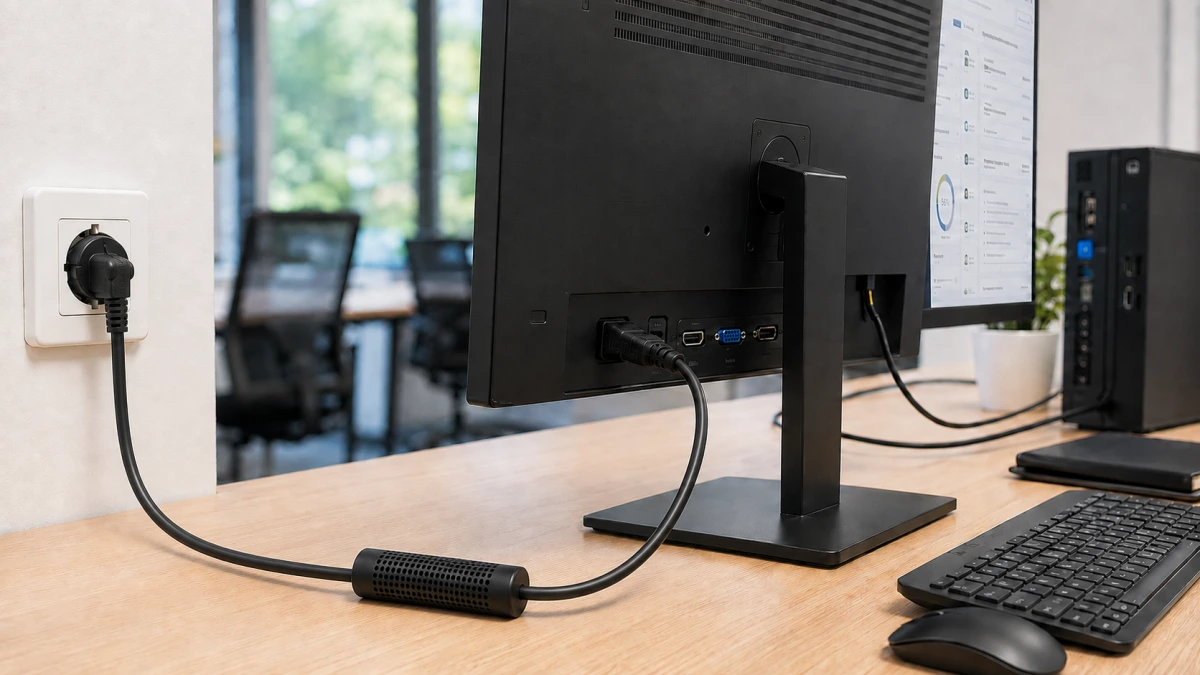
Every proposed load must remain within Smart Kablo's 5 A continuous-current limit. Confirm voltage, frequency, protective earth, connector type, measured current and startup behaviour. A Schuko-to-C13 configuration may suit compatible office equipment supplied from a Schuko outlet; rack-fed systems may require a different input. Compatibility is decided on the exact equipment and installation—not by country name or connector appearance alone.
Pilot before a company-wide rollout
Start with a small, representative group. Track measured after-hours energy, user disruption, update completion and successful startup for at least a normal business cycle. Document exceptions and an opt-out path. Scale only when the observed result is repeatable.
Is standby power always waste?
No. Some standby load supports wake functions, updates or remote management. Classify the business need before changing it.
Can a relay shut Windows down safely?
No. Use the operating system or endpoint-management tooling for graceful shutdown; the relay controls input power only.
How should savings be reported?
Report measured baseline and target kWh separately, including device count, period, tariff and exclusions.