Per-server kWh begins with an explicit measurement boundary.
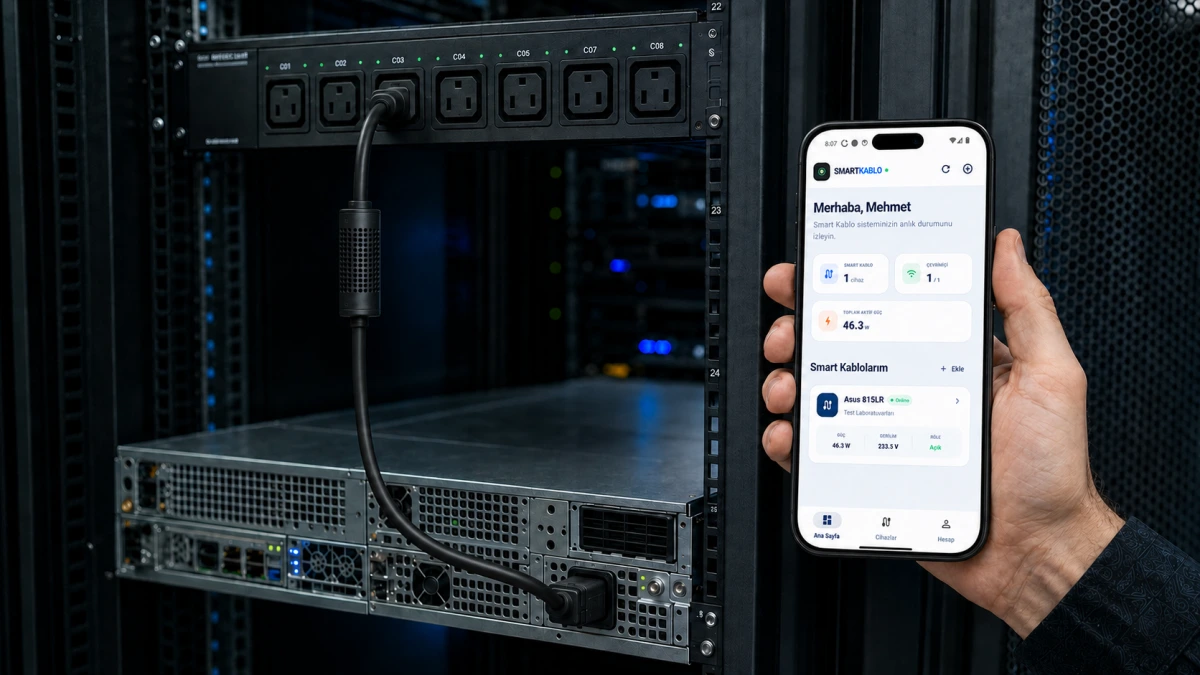
Measure the input feeding the exact equipment. Do not infer one server's consumption from the rack total, and do not treat one feed of a dual-PSU server as the whole device.
Choose the measurement architecture
| Layer | What it can represent | Typical limitation |
|---|---|---|
| Facility meter | Building or electrical distribution | Cannot attribute one rack or server |
| UPS/PDU aggregate | Protected branch or rack total | May combine many loads |
| Metered PDU outlet | One outlet, when supported | Feature and accuracy are model dependent |
| Inline device meter | The connected compatible feed | One feed may not equal a dual-PSU server total |
What W, A, kWh and power factor tell you
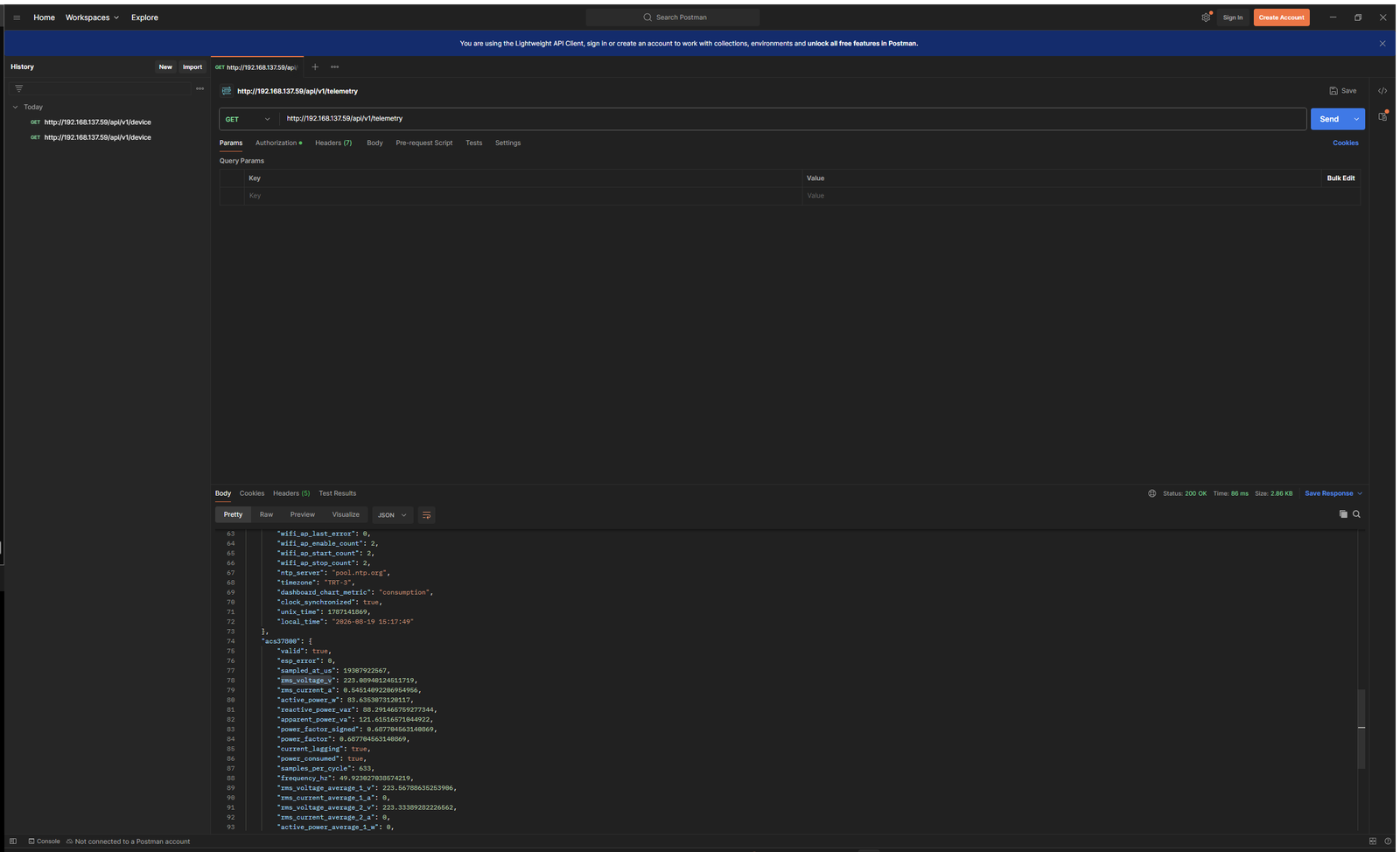
Watts describe active power at a moment. Amps help evaluate current against the cable and outlet limits. kWh accumulates energy over time and is the appropriate basis for an energy period. Power factor helps interpret the relationship between active and apparent power. Keep source voltage, timestamp, sample interval and data gaps with the record.
Dual-PSU servers need two-feed analysis
Redundant supplies may share load, operate active/standby or change distribution after a fault. Measuring only one feed can materially understate or misread the server total. To report whole-server energy, measure both inputs with a synchronised method and confirm the redundancy design. Never switch both feeds merely to obtain a reading.
Live telemetry and energy history
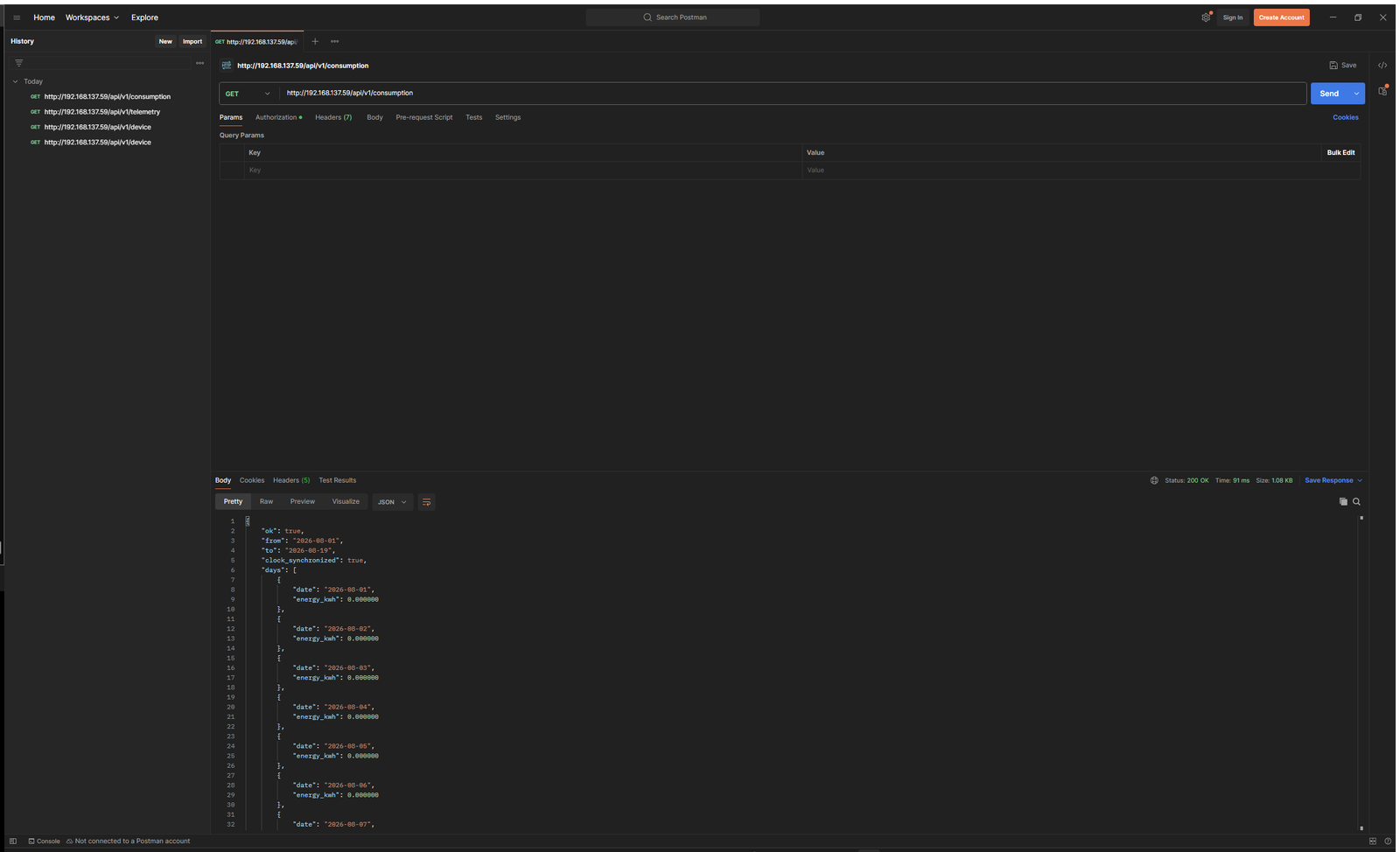
Where the exact deployed version supports the documented REST endpoints, a hosting workflow can collect live electrical values and month-to-date energy records. Preserve raw data, status codes and version information, and design for missing intervals rather than silently interpolating them.
Turn readings into capacity information
Separate idle and busy states
Record representative workload windows instead of treating one value as permanent.
Track maximum as well as average
Protection and connector decisions depend on peaks and startup behaviour, not only energy totals.
Compare before and after
Use consistent windows to evaluate hardware, firmware or workload changes.
Keep data tied to the outlet
A customer report is credible only when the physical feed and asset history are auditable.
Build an operational report before a billing report
A monthly report can show asset ID, measurement boundary, period, data completeness, kWh, average and peak watts, anomalies and maintenance events. If the data will support customer billing, metrology, contractual, tax and local regulatory requirements need separate legal and technical validation. Do not market a general monitoring device as a revenue-grade billing meter without the required evidence.
Controlled remote recovery
An authorised relay can be a last-resort recovery point when software and vendor management interfaces fail. Confirm the service incident, backups and write activity; obtain approval; use the equipment manufacturer's off interval; restore power; then verify telemetry and service health. The device does not make that decision automatically.
REST API and SNMP boundaries
Use only REST paths documented for the installed release. For SNMP, obtain the exact supported version, MIB and OID list before writing an NMS template. Separate read-only monitoring from privileged relay actions, segment the management network and use unique credentials and event logs.
Per-server measurements are not PUE
PUE compares total facility energy with IT equipment energy over a defined period. One server input is only one component of the IT load. Do not multiply a single device reading by a guessed PUE and present it as measured facility energy; label any such calculation as an explicit estimate.
Pilot checklist
- Select representative single- and dual-PSU loads.
- Verify IEC connectors, voltage, inrush and the 5 A continuous limit.
- Define source-of-truth asset and outlet IDs.
- Collect at least one normal workload cycle.
- Test data gaps, clock drift and firmware upgrades.
- Keep relay control disabled until the recovery runbook is approved.
Can this measure the entire rack?
An inline device measures its connected feed, not the whole rack. Use an upstream meter for rack totals.
Can one cable report a dual-PSU server total?
No. Both feeds must be included in a valid whole-server boundary.
Can these readings be used for customer billing?
Only after independent confirmation that the complete system satisfies the relevant metrology, contract and legal requirements.