What is a smart PDU?
A smart or intelligent PDU distributes power to multiple rack outlets and, depending on its exact model, may add aggregate or per-outlet measurement, remote monitoring and outlet switching. The term is broad: some products only report a branch total, while others expose each outlet. Network, sensor, redundancy and protocol features vary, so procurement must be based on the datasheet—not the category name.
What is a PDU power cord?
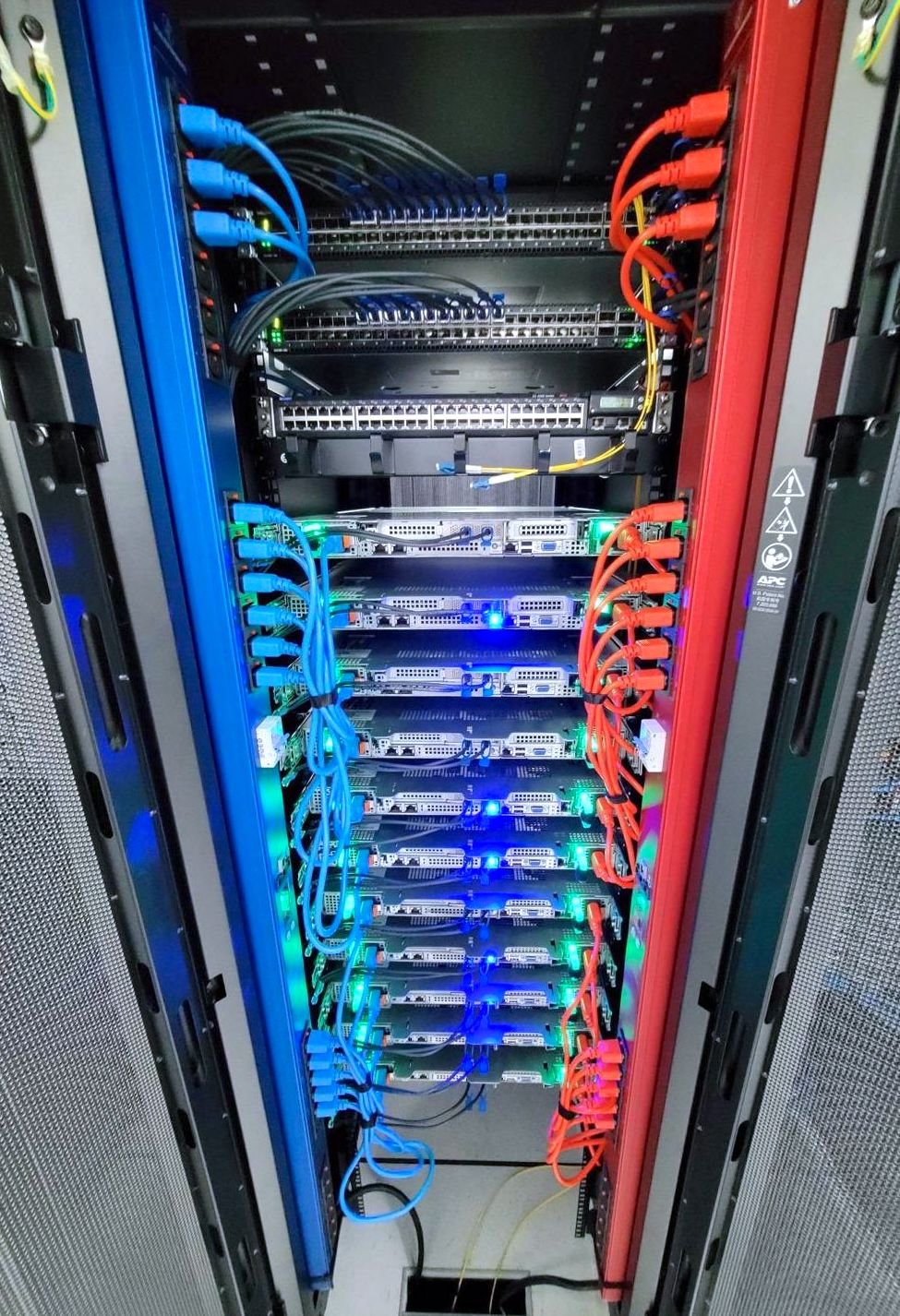
A standard PDU power cord connects a PDU or UPS outlet to an equipment inlet. It normally provides no measurement or switching. IEC naming describes the mating connector: a C14 plug enters a C13 receptacle, while a C20 plug enters a C19 receptacle. Always identify both ends and follow the equipment labels.
What is an inline smart power cable?
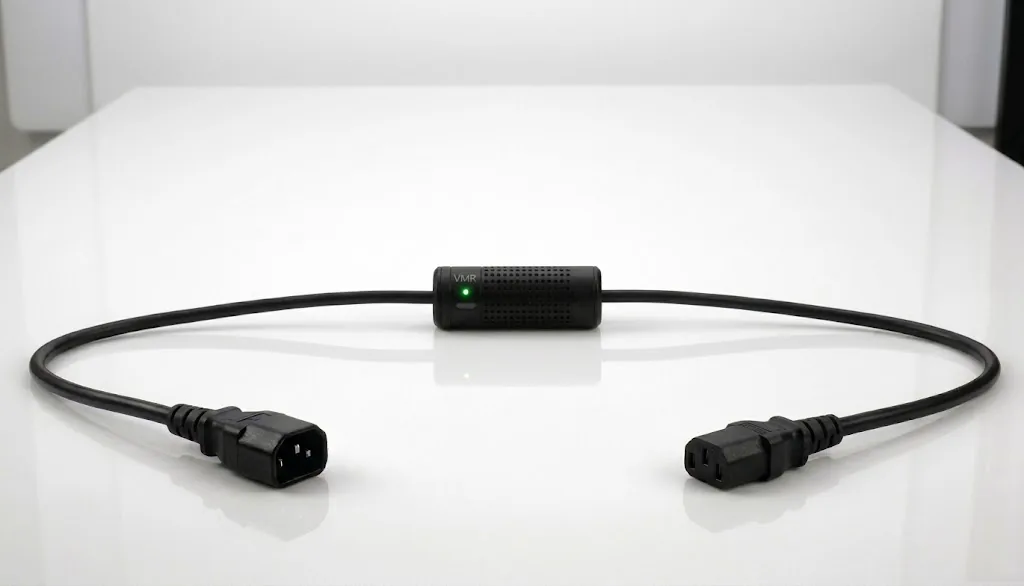
Smart Kablo places measurement electronics, an authorised relay-control point and a UID indicator between one compatible source outlet and one compatible device. It can be introduced selectively without replacing a working PDU or UPS. That device-level boundary is useful when only a small group of servers, switches, NAS units, PCs or displays needs closer visibility.
Smart PDU and smart power cable compared
| Criterion | Smart PDU | Inline smart cable |
|---|---|---|
| Measurement boundary | Rack, branch or outlet, model dependent | One connected compatible device |
| Deployment scope | Usually many rack outlets | Selected loads can be added gradually |
| Existing PDU | May require replacement or a new rack position | Can remain in service if source compatibility is verified |
| Current range | Depends on PDU and outlet ratings | Smart Kablo: 5 A continuous maximum |
| Remote switching | Only on suitable switched models | Authorised relay control for the attached load |
| Failure and maintenance domain | A shared rack component | Individual inline components |
| Protocols | Vendor and model dependent | Use only interfaces documented for the deployed version |
Compare total project cost, not unit price alone
Include rack downtime, electrical work, outlet count, network ports, licensing, monitoring integration, spares and operating labour. A full intelligent PDU can be efficient when many outlets require the same capability. A selective inline rollout can be efficient when only a few high-value devices require measurement or controlled power cycling. Neither conclusion is universal.
Why use a device-level approach?
Keep a compatible PDU or UPS
Add a measurement point without assuming the distribution layer must be replaced.
Follow one connected load
Measured values correspond to the inline device boundary, subject to measurement specifications.
Start with priority equipment
Pilot a small group, document results and expand only where the use case is proven.
Match the real source
C14, C20 or Schuko input configurations address different installations; they are not interchangeable.
When is a smart PDU the better choice?
- Most rack outlets need consistent metering or switching.
- High-current or three-phase distribution exceeds an inline device's scope.
- Rack-level environmental sensors or vendor redundancy features are required.
- A standardised PDU platform is part of a new data-centre build.
- The selected PDU's protocol, security and support model meet the requirement.
Can they be used together?
Yes, if the architecture avoids double counting and every component is correctly rated. A monitored PDU may provide rack or outlet context while an inline device follows a selected load. Label the measurement boundary, maintain a single asset mapping and restrict switching rights. An inline relay does not replace upstream breakers, leakage protection, UPS functions or the PDU's aggregate-load management.
Electrical and operational limits
Is an inline smart cable a small smart PDU?
It can offer related measurement and control functions, but its architecture and scope are different: it follows one compatible load rather than distributing power to many outlets.
Will it work with any existing PDU?
No. The exact outlet, voltage, current, protection and installation must be compatible.
Can I combine rack totals and device data?
Yes, but define the boundary and avoid summing overlapping measurements as though they were independent loads.